




Vat Dyestuff
Established in 1990, We are a professional manufacturer engaged in the research, development, production, sale and service of Rubber Accelerator, Antioxidant and other Rubber chemicals in int'l market.
Why Choose Us
World-wide expertise
We know international markets and trends. Our expertise, experience and network cover all corners of the world.
Competitive Price
We have professional sourcing team and cost accounting team, stive to reduce cost and profit and provide you a good price.
We always deliver on time
We genuinely understand the value of time in business and hence adhere to time and deliver all projects on time to our customers.
Customer Satisfaction
Providing after-sales services can enhance customer satisfaction by ensuring that customers' needs are met even after the purchase. This can lead to increased customer loyalty and positive word-of-mouth referrals.

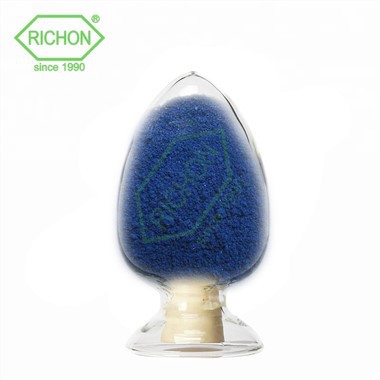
Vat dyes owe their name to the fact that the foremost member in this series, indigo, was applied to textiles by means of a fermentation process in wooden vessels commonly known as ‘vats’. The dyes are amongst the oldest natural colouring matter derived from origins like vegetable (plants, stems, etc.), insects and animals.
Benefits of Vat Dyestuff
High wash fastness
Vat dyes have strong chemical bonds with the fibers, which makes them highly resistant to washing. This ensures that the color remains intact even after multiple washes.
Resistance to light
Vat dyes are highly resistant to light, which ensures that the colors do not fade even after prolonged exposure to sunlight.
Good resistance to chemicals
Vat dyes are also resistant to chemicals such as bleach, which can cause color fading in other types of dyes.
Wide range of colors
Vat dyes are available in a wide range of colors, from bright and vibrant shades to more muted tones.
Applications of VAT Dyes in Tie-dyeing Areas
Fabric Preparation: To begin, select a fabric made from natural fibers like cotton or rayon, as these materials readily absorb VAT dyes. It's essential to prewash the fabric to remove any sizing agents or impurities that may interfere with dye absorption.
Tying Techniques: Tie-dyeing is all about creating patterns through folding, twisting, pleating, or scrunching the fabric and securing it with rubber bands or strings. The tied sections will resist the dye, resulting in distinctive patterns and color variations.
Dye Mixture: VAT dyes are initially in a soluble and colorless reduced form, which allows them to penetrate the fabric fibers. Sodium dithionite, commonly known as sodium hydrosulfite, is a common reducing agent used to convert VAT dyes into their soluble form before dyeing. The reducing agent helps activate the dye molecules and prepares them for coloration. Alkalis such as sodium hydroxide or soda ash (sodium carbonate), are used to create an alkaline environment in the dye bath. Alkalis help facilitate the solubility and reactivity of VAT dyes, ensuring optimal dye penetration and fixation onto the fabric. They also help in achieving the desired shade and color intensity.
Dye Application: Prepare a dye bath by dissolving the VAT dyes in water according to the manufacturer's instructions. The dye bath can contain one or multiple colors, depending on the desired design. It's advisable to wear gloves to protect your hands from staining. Immerse the tied fabric sections into the dye bath, ensuring that the dye penetrates all the folds and crevices.
Dye Fixation: After applying the dyes, it's crucial to let the fabric sit for a specific duration to allow the dye molecules to bond with the fibers. The exact time required for dye fixation depends on the specific VAT dye used and can range from several hours to overnight.
Oxidation and Rinse: Once the fixation time is complete, the fabric needs to undergo an oxidation process to convert the soluble dye back to its insoluble form. Unravel the tied fabric carefully and expose it to air or use an oxidizing agent as directed by the dye manufacturer. This step helps ensure that the colors stay vibrant and long-lasting.
Rinse and Wash: After oxidation, rinse the fabric thoroughly to remove excess dye. Start with cold water to remove most of the dye, and gradually increase the water temperature until it runs clear. Finish with a final wash using mild detergent to remove any remaining dye residue and enhance color fastness.
Drying and Enjoying: After washing, hang the fabric to dry or use a dryer if the fabric allows. Once dry, the tie-dyed fabric is ready to be used for various purposes, such as clothing, accessories, home decor, or even as artwork.
Dyeing Process with Vat Dyes
Pre-Treatment and Preparation of Fabrics
Before diving into the exciting world of vat dyeing, it's essential to properly prepare your fabrics. Imagine trying to paint a masterpiece on a dirty canvas - it just wouldn't work. The same goes for dyeing. Fabrics need to be pre-treated to remove any impurities that could hinder the dye absorption.
This pre-treatment typically involves scouring the fabric to remove natural oils, waxes, and other contaminants. It's like giving your fabric a much-needed spa day. After scouring, the fabric is usually treated with chemicals like sodium carbonate or sodium hydroxide to create an alkaline environment that promotes dye fixation.
Vat Dyeing Methods
Now that your fabric is squeaky clean and ready for its colorful transformation, it's time to dive into the vat dyeing process. Vat dyes get their name from the large vats or dye baths where the magic happens.
There are a few different methods for vat dyeing, but the most common one involves immersing the fabric in a dye bath containing the vat dye. The fabric is then manipulated (not in a creepy way) to ensure even dye distribution. It's like giving your fabric a gentle massage to make sure every fiber gets its fair share of color.
Dyeing Parameters and Techniques
Dyeing is a delicate art that requires careful control of various parameters. When working with vat dyes, factors such as temperature, pH levels, and dye concentration all play a role in achieving the desired color.
Temperature can significantly impact the dyeing process, with higher temperatures often leading to faster dye absorption.on the other hand, determine the solubility of the dye and can influence the shade obtained. It's like playing chef and balancing different ingredients to create a masterpiece.
Properties of vat dyes
i.Vat dyes are water-insoluble dyes.
ii. It has high color fastness, which is uncommon in other dye classes.
iii. It has poor rubbing fastness, but this can be mitigated with special treatments to the fabric.
iv. It is mostly soluble in hot water, and a few are soluble in the presence of little Na2CO3.
v. These dyes' solubility can be improved by adding urea at 50–60 ° C temperature.
vi. It is important for dyeing cotton in pale shades only.
vii. It should be avoided from sunlight because it is sensitive to light, and ester groups are affected to develop prematurely.
viii. All shades are brilliant that are got from vat dyes.
ix. It has less affinity for cellulose, so Na2CO3 is added to enhance dye uptake.
x. Although some dyes show leveling at low temperatures, dyes at higher temperatures encourage the shading level.
xi. These are costly, but the leveling property is excellent.
xii. The tinctorial power of these dyes is too low.
xiii. These dyes are available in two forms powder and paste.


Classification of vat dyes
(1) The IN (indanthrene normal) group of dyes require the use of concentrated NaOH and high vatting (60 °C) and dyeing temperatures (60 °C). No salt is added to the dyebath because of the high substantivity of the leuco dyes for cotton.
(2) The IW (indanthrene warm) group of dyes require only moderate amounts of NaOH and lower vatting (50 °C) and dyeing temperatures (50 °C). The leuco forms of these dyes have moderate substantivity for cotton and some addition of salt is needed during dyeing to aid exhaustion.
(3) The IK group of dyes only need a low concentration of NaOH with low vatting (40 °C) and dyeing temperatures (20 °C). These dyes have low substantivity for cotton and need considerable salt for good dyebath exhaustion. Some have amide groups that would be hydrolysed under the vatting and dyeing conditions used for IN and IW dyes.
Precautions in Vat Dyeing
To get uniform level dyeing results, the concentration of sodium hydro sulphite and caustic soda must be in exact quantity to reduce the dye bath during whole the process. Excessive quantity of reducing agent and alkali decrease the exhaustion rate of the dyeing. Similarly insufficient quantity of chemicals produce adverse effect on dyeing so to control this balance Phenolphthalien paper and Hydro papers are used.
Phenolphthalien Paper: It is white paper which turns in pink color while contact with caustic soda.
Vat Yellow Paper: It is gold yellow paper which turn in blue-violet color if hydro is available in dye bath.

Differences between Reactive and VAT dyes
1- MECHANISM
Reactive: Covalent Bond Formation.
Good Affinity for the Cellulosic Fibers.
Smaller Molecule Size.
VAT: {Converting Water-Insoluble pigment into a Water-Soluble dye}.
Redox Reaction occurs
2- OLUBILITY
Reactive: Easily Soluble in Water.
Good Affinity for Water.
Polar Nature.
VAT: In-Soluble in Water.
Adding Reducing Agents to become Soluble.
3- CHARGEABILITY
Reactive: Negatively Charged.
Remove Negative Charge by Adding Salts,
i.e. NaCl
VAT: Negatively Charged.
Alkali is Used for Removing Charge.
4- SUBSTANTIVITY
Reactive: Good Substantivity for the Fibers.
High Degree of Fixation Efficiency.
pH Range: 7 – 11
VAT: Substantivity is good for Cellulosic Fibers.
High Fixation because of Reducing Agents.
pH Range : 12 – 15
5- FASTNESS PROPERTIES
Reactive: Washing: Good
Rubbing: Moderate
Lightening: Good
Chemical: Stable
Perspiration: Good
VAT: Washing: good
Lightening: Good
Crocking: Poor
Chemicals: Average
Perspiration: Good
6- APPLIANCES
Reactive: They are Applied to Cellulosic, Protein and Polyamide Fibers;
i.e. Cotton, Wool.
VAT: They are Applied to Cellulosic and Protein Fibers; i.e. Viscose Rayon, Wool.
7- COLOUR RANGE
Reactive: Wide Range of Colors.
Brighter Shades.
All Colors are Achievable.
VAT: Large Range of Colors.
Dark Shades Available.
Major Colors: Indigo, Green and Black.
8- ENVIRONMENT BEHAVIOUR
Reactive: Non-Environmental Friendly.
Carcinogenic Dye.
VAT: Non-Environmental Friendly.
Cancer Causing Dye
9- COST (Price is for reference)
Reactive: U.S: 0.6 – 1.9 $/Kg.
VAT: U.S: 9.9 – 13.98 $/Kg
10- EASE OF PROCESS
Reactive: Easy
VAT:Difficult
11- POPULARITY
Reactive: Widely used for dyeing garments i.e. Ladies wear, Men’s wear, Kid’s wear
VAT: Widely used in dyeing jeans or denim
The next 10 years to see an unprecedented growth of the Vat Dyes Market
The original vat dye is indigo, once obtained from plants but now produced synthetically. Vat dyes were so named because of the vats used in the reduction of indigo plant through fermentation. Vat dyeing is a process that refers to dyeing that takes place in a bucket or vat. Almost any dye including direct dyes, and acid dyes, can be used in a vat dye. Wool, cotton and other fibers can be all dyed with vat dyes. Vat dyes tend to have poor rubbing fastness,but this can be mitigated with special treatments to the fabric.usually not derived directly from indigo itself, but built up synthetically and anthraquinone derivatives.but built up synthetically and anthraquinone derivatives.but built up synthetically and anthraquinone derivatives.
The market for vat dyes depends upon the fortunes of its principal end-user, textiles, which account for majority of the total demand.demand would stem from consumer preference for environmental friendly vat dyes that meet stringent and increasingly rigorous quality and performance standards.raw material price volatility, global over capacity, falling profit margins and high production costs could hamper the growth of this market.
Asia-Pacific, with its thriving economies and rapidly expanding manufacturing bases, is expected to be the fastest growing market for vat dyes in the coming years. There has been a migration of manufacturing facilitates from the U.S. and Europe to the emerging markets of Asia Pacific due to stringent environmental regulations.
Our Factory
We have obtained ISO9001 certificates. Our products have been exported to 57 countries. Our export turnover is more than 36 million US dollars per year.

FAQ
Q: What are the precautions for vat dye?
Q: What is the stripping of vat dye normally carried out using?
Q: Is vat dye soluble in water?
Q: What is the vat process in dyeing?
Q: What is the reducing agent for vat dye?
Q: What is the temperature of vatting?
Q: What is the difference between mordant and VAT dyes?
A substance used to set (that is bind) dyes on fibres by forming a coordination complex with the dyes is known as a mordant or dye fixative.
Q: Why caustic soda is used in VAT dyeing?
Q: What is the difference between vat dye and disperse dye?
Q: How do you identify vat dye?
Q: What is the leveling agent for VAT dyeing?
Q: Is vat dye a natural dye?
Q: What precautions should I take during the vat dye process?
Q: How to mix vat dyes?
Q: How is vat dye printed?
Q: Is vat dye harmful?
Q: What is the process of vatting?
Q: Is vat dye better than direct dye?
Q: What is stripping of vat dye?
Q: What is the reducing agent for vat dye?