




Vulcanizing Agent
Established in 1990, We are a professional manufacturer engaged in the research, development, production, sale and service of Rubber Accelerator, Antioxidant and other Rubber chemicals in int'l market.
Why Choose Us
World-wide expertise
We know international markets and trends. Our expertise, experience and network cover all corners of the world.
Competitive Price
We have professional sourcing team and cost accounting team, stive to reduce cost and profit and provide you a good price.
We always deliver on time
We genuinely understand the value of time in business and hence adhere to time and deliver all projects on time to our customers.
Customer Satisfaction
Providing after-sales services can enhance customer satisfaction by ensuring that customers' needs are met even after the purchase. This can lead to increased customer loyalty and positive word-of-mouth referrals.


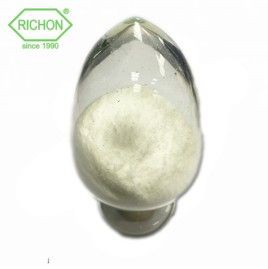
The transformation of a liquid resin to a solid adhesive or sealant is achieved by the addition of chemically active compounds known as curing, cross-linking, or vulcanizing agents. They are substances that are added to a polymeric resin to assist the curing reaction and cross-linking to further increase the thermal stability and mechanical properties of the polymer.
Trithiocyanuric Acid Market Report
The Trithiocyanuric Acid market research reports provide valuable insights into current market conditions, including market size, trends, drivers, challenges, and opportunities. The market is expected to experience a significant annual growth rate of 13.4% from 2024 to 2031, driven by increasing demand from various end-use industries such as agriculture, pharmaceuticals, and chemical manufacturing. The report highlights the key factors influencing the market growth, such as technological advancements, regulatory framework, and competitive landscape. Despite the promising growth prospects, the industry faces challenges such as fluctuating raw material prices, stringent environmental regulations, and intense competition from alternative products. However, opportunities in emerging markets, product innovation, and strategic collaborations are expected to fuel the growth of the Trithiocyanuric Acid market in the coming years. Overall, the research reports offer crucial information for stakeholders to make informed decisions and capitalize on the lucrative opportunities in the market.
Selecting the Right Curing Agent
|
Curing Agent |
Features & Applications |
|
Acrylates / Methacrylates |
Primary use is as a cross-linking agent in acrylic pressure sensitive adhesives, or As a cross-linking agent for free radical polymerization in reactive adhesives including radiation (UV/EB) cured systems. |
|
Amines / Amides |
Primary use is as a cross-linking agent in polymers in reactive formulations such as curing agent for epoxy and polyurethane. Family can be subdivided into aliphatic amidoamine, aromatic, cycloaliphatic, dicyanomines and polyamine types. |
|
Anhydrides |
Primary use is as a cross-linking agent in reactive epoxy structural adhesives. Requires long, elevated temperature cure. Has a critical mix ratio. |
|
Azridines |
Cross-links with various organic groups containing active hydrogen (e.g., carboxylic acids, alcohols, amines, mercaptans, epoxides, isocyanates, etc.). Used at levels of 2%-4% by weight of polymer system. Generally used in acrylic or polyurethane emulsions. Works at room temperature. |
|
Carbodiimides |
Carbodiimides react with carboxylic acid and amine groups on adhesive resins. Carbodiimides can be used in 1-pack adhesives and provide up to a 90 day pot-life. They can also be used in 2 component adhesive systems, and can react at room temperature. |
|
Diols / Triols |
These polyurethane crosslinkers are low molecular weight diols or triols, and Diamines which react with an isocyanate-terminated prepolymer to produce polyurethane (cross-linked). |
|
Isocyanates |
There is a wide range of isocyanates that allow formulators to produce high quality polyurethane and polyurea adhesives. Isocyanates contain reactive NCO groups which react with hydroxyl groups on polyols to form polyurethanes and with amines on polyamines to form polyureas. |
|
Peroxides / Persalts |
Peroxides are used as catalysts for unsaturated polyester resins and other free radical curing resins. They generate free radicals to cause cross-linking and act at either elevated or ambient temperature. |
|
Silanes |
A silane is a molecule containing a central silicon atom bonded to two types of groups: Alkoxy groups and organo-functional groups. These two types of groups exhibit different reactivity and allow sequential reactions. In the cross-linking process, the first step is generally the grafting of the silane to the polymer backbone and, finally, the linking of the polymer chains via condensation of silanols. Most often used with polyurethane adhesives and to form polyurethane prepolymers. |
|
Vinyl / Allyl Compounds |
These are generally diallyl esters of linear dicarboxylic acids, and they are used as multi-functional cross-linking agents for vinyl polymers. These are often used in waterborne pressure sensitive adhesives. |
|
Vegetable-based |
Generally plant-based curing agents such as fatty oil acid or dicarboxylic acid. Also, diols and triols. |
Rubber vulcanizing agent has the following advantages
Improvement of rubber strength
The vulcanizing agent can change the single bond between the rubber molecular chains into a double bond, forming a cross-linked structure. This cross-linking structure can improve the strength, hardness and abrasion resistance of rubber, and also increase the elasticity and tensile properties of rubber.
Improve heat resistance
The vulcanizing agent can make the rubber molecular chain form a three-dimensional network structure, so that the rubber has better heat resistance and aging resistance. Under the high temperature environment, the vulcanized rubber can maintain its original performance and will not soften or deform.
Improve chemical resistance
Vulcanized rubber has better chemical resistance, and can resist the corrosion of acids, alkalis, solvents and other chemicals. Therefore, vulcanized rubber is often used in the manufacture of chemical laboratories, chemical plants and other places in the pipeline and equipment.
Improve adhesion
The vulcanizing agent can make the rubber surface generate a vulcanized layer, so that the rubber has better adhesive properties. The vulcanized rubber can be better adhered to the surface of different materials such as metal, glass, plastic, etc. It is widely used in the manufacture of seals, pipes and other products.
Improve production efficiency
Vulcanizing agent can accelerate the rubber vulcanization reaction, shorten the vulcanization time and improve the production efficiency. At the same time, in the vulcanization process, the vulcanizing agent can also make the rubber surface smooth, improve the overall aesthetics of the product.
How to choose vulcanization accelerator
Rubber type
Different rubbers have different performance characteristics, and different vulcanization systems are used. When selecting different types of accelerators for different vulcanization systems, the matching between them should be considered.
Accelerator quality
The quality of accelerator is one of the problems considered by the formulation engineer. In the current market, there are still many phenomena of using fake and inferior products, so we should be careful when selecting them, otherwise it will directly affect the vulcanization or anti-aging properties of rubber.
Effect on the properties of compound and vulcanizate
Accelerators participate in the formation of rubber spatial network structure during vulcanization, which has a direct relationship with the structure of vulcanizates, that is, its physical and mechanical properties and aging properties. The accelerator has softening effect on the compound, which increases the plasticity of the compound and changes the processing performance of the compound.
Scorching performance
The accelerator has a decisive effect on the scorching time of the rubber compound (i.e., the duration before the start of thermal vulcanization of the rubber compound). Therefore, the accelerator selected should have a considerable scorching time of the rubber compound, which has a significant effect on the operational safety of the rubber compound in the process of mixing, rolling, extrusion or injection, the fluidity of the rubber compound at the initial stage of vulcanization and the adhesion to the fabric. Especially in recent years, in order to improve the production efficiency, the processing conditions are becoming more and more strict, and the requirements for the scorch resistance of the rubber compound are also becoming higher and higher. However, too long scorching time will lead to an increase in the total curing time, which is not only detrimental to the improvement of labor efficiency, but also has a negative impact on the deformation of the molded vulcanized products during the curing process.
The scorching resistance of accelerant is directly related to its curing critical temperature (i.e. the temperature at which the accelerant acts on the curing process), at which the activity of accelerant is not significant; The accelerator is activated above this temperature to give full play to its vulcanization effect. Unfortunately, most accelerants have not yet measured this temperature. When several accelerants are used together, the activity of some accelerants is inhibited, and some accelerants will have greater activity even below their critical temperature.
Vulcanization flatness
The accelerator should make the rubber compound have a broad vulcanization flat curve during the suitable vulcanization period. In other words, the properties of the vulcanizate should not show obvious changes during this period, which is particularly important for rubber thick products and solid products. Rubber is a poor conductor of heat. The surface and internal heating conditions of vulcanized rubber are not consistent. Wide vulcanization flatness is the guarantee to avoid excessive sulfur and make all parts of the product vulcanized evenly.
Dispersion
Accelerator with poor dispersion performance in rubber compound not only needs a long mixing time, increases equipment power consumption, but also tends to cause uneven vulcanization of products due to uneven mixing. Generally, the low melting point accelerator is easy to melt and diffuse in the rubber compound, so it has good dispersion; For high melting point accelerant, powder products with small particle size are used; For some promoters that are difficult to disperse, they can be used as master compound.
Frost spraying
The frost spraying of the mixed rubber will cause poor adhesion in the next process and reduce the appearance quality of the product, so it should be avoided. Accelerator frosting is related to the compatibility of accelerator with rubber. Generally, nonpolar EPDM rubber is easy to frost, while polar nitrile rubber and neoprene rubber are difficult to frost. In accelerants, especially accelerants TMTD and ZDMC have poor compatibility with rubber, which may cause frosting. The solubility of accelerants ZDEC and ZDBC with large alkyl group with rubber is better than that of TMTD and ZDMC, and the frosting phenomenon is reduced.
Contamination and coloration
Some accelerants stain rubber products due to their different colors, and some discolor products after chemical action or sunlight exposure. These accelerants cannot be used in white or bright color products. Some accelerants have obvious odor and bitter taste, and some accelerants can also pollute other substances through contact and migration.
Environmental protection
At present, most of the accelerants used are non-toxic or extremely toxic, but there are still some others with toxicity. These accelerants cannot be used in medical and health products and rubber products in contact with food. The use of toxic or highly toxic accelerants should be protected during operation.
Water solubility
For the production of latex products, it is convenient to select water-soluble accelerant, among which the representative products are ZDEC, ZDBC, ZMBT, TMTD, MBT, etc
Powder Vulcanizing Agent Market Size
Powder vulcanizing agents are essential components in the rubber industry, primarily used for enhancing the properties of rubber compounds during the vulcanization process. The process of vulcanization involves the cross-linking of polymer chains within rubber materials to improve their strength, durability, and elasticity. Powder vulcanizing agents facilitate this cross-linking process by acting as accelerators or activators, thereby enabling manufacturers to achieve optimal material performance. These agents are crucial in various industries, including automotive, construction, and manufacturing, where rubber products are widely used. The demand for powder vulcanizing agents is driven by the growing automotive industry, increasing construction activities, and the expanding use of rubber products in industrial applications.the rising focus on enhancing product quality, durability, and performance across industries further fuels the demand for these agents.
Opportunities in the powder vulcanizing agent market are abundant, driven by the evolving needs of end-users and advancements in rubber manufacturing technologies. One significant opportunity lies in the development of eco-friendly and sustainable vulcanizing agents to align with the growing environmental concerns and stringent regulations.the expanding applications of rubber products in sectors such as healthcare, aerospace, and electronics offer promising prospects for market growth. Geographically, emerging economies present lucrative opportunities due to the rapid industrialization, infrastructure development, and increasing automotive production. The segmentation of the powder vulcanizing agent market can be categorized based on product type, application, and end-user industries.
Product types may include sulfur-based agents, peroxide-based agents, and other specialty agents tailored for specific rubber formulations. Applications range from tires and automotive parts to industrial hoses, conveyor belts, and seals. End-user industries encompass automotive, construction, industrial manufacturing, and healthcare, among others. This segmentation enables manufacturers and suppliers to target specific market segments effectively, offering customized solutions and capturing diverse opportunities within the powder vulcanizing agent market landscape.
Our Factory
We have obtained ISO9001 certificates. Our products have been exported to 57 countries. Our export turnover is more than 36 million US dollars per year.

FAQ
Q: Which is mostly used vulcanizing agent?
Q: What are the different types of vulcanizing agents?
Q: What is the purpose of vulcanizing?
Q: What is added as vulcanizing agent in natural rubber?
Q: What acid is used in vulcanization?
Q: Is sulphur used as vulcanizing agent?
Q: Is SO2 a vulcanizing agent?
Q: How to tell if rubber is vulcanized?
Q: What is the mechanism of vulcanization?
Q: What is the most commonly used vulcanizing agent?
Q: What is the role of activator in vulcanization?
Q: What is curing in vulcanization?
Q: What is vulcanization accelerator?
Q: What is the chemistry of vulcanization?
Q: What is vulcanizing sealant?
Q: Which is the most commonly used reagent for vulcanization of natural rubber?
Q: What are the common types of Vulcanizing Agents?
Q: Why is Vulcanizing Agent important in rubber processing?
Q: How is Vulcanization process carried out?
Q: What are the considerations when selecting a Vulcanizing Agent?