


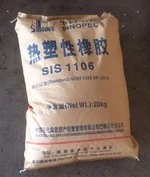


Rubber and Plastic Testing Equipment
Established in 1990, We are a professional manufacturer engaged in the research, development, production, sale and service of Rubber Accelerator, Antioxidant and other Rubber chemicals in int'l market.
Why Choose Us
World-wide expertise
We know international markets and trends. Our expertise, experience and network cover all corners of the world.
Competitive Price
We have professional sourcing team and cost accounting team, stive to reduce cost and profit and provide you a good price.
We always deliver on time
We genuinely understand the value of time in business and hence adhere to time and deliver all projects on time to our customers.
Customer Satisfaction
Providing after-sales services can enhance customer satisfaction by ensuring that customers' needs are met even after the purchase. This can lead to increased customer loyalty and positive word-of-mouth referrals.


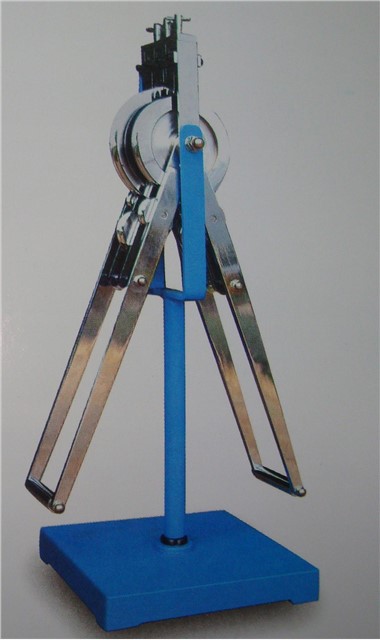


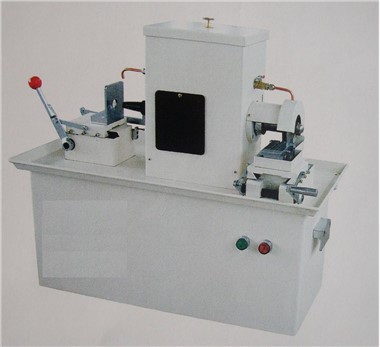
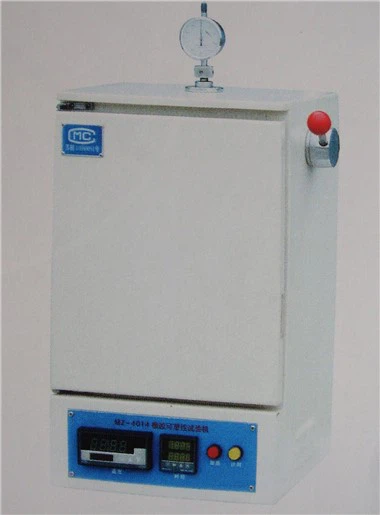

Ozone Test Chamber (or called Ozone Aging Chamber and Ozone Aging Test Chamber) is design according to rubber being sensitive characteristic of to ozone, it simulate the environmental to accelerate the rubber aging process by ozone.
Why do rubber products need ozone aging test
In the process of processing, storage and use of rubber and its products, due to the comprehensive action of internal and external factors, the physical and chemical properties and mechanical properties of the rubber are gradually deteriorated, and the use value is lost at last. This change is called rubber aging, which is characterized by cracking, stickiness, hardening, softening, chalking, discoloration, mildew, etc.
Ozone mainly exists in the ozone layer below the stratosphere in the atmosphere (20 kilometers away from the surface), but there is also rare ozone in the surface atmosphere (mainly from natural discharge phenomena such as lightning and photochemical reactions: NOx in automobile exhaust is The formation of free oxygen combined with oxygen molecules to form ozone under UV irradiation). Because some plastic materials and most rubber materials are sensitive to ozone, even thin ozone will cause cracks in some plastic materials and most rubber materials. To deal with this problem, it is very important to test ozone aging.
The content of ozone in the atmosphere is very small but it is the main factor for rubber cracking. The ozone aging test chamber manufacturered by Guangdonng Yuanyao Test Equipment, simulates and strengthens the ozone conditions in the atmosphere, studies the law of the action of ozone on rubber, and quickly identifies and evaluates the ozone aging resistance and resistance of rubber Ozone and ozone protection test methods, and effective anti-aging measures are adopted to improve the replacement of rubber products. There are two established standards for rubber ozone aging test methods, one is the static strain test method, and the other is the dynamic strain test method.
Ozone aging test chamber can be used for rubber products, such as vulcanized rubber, thermoplastic rubber, cable insulation and sheath, etc., to test the change degree of cracks on the surface of the sample or other properties of the sample at the predetermined time in the constant temperature chamber containing a closed air and ozone without light exposure under continuous or intermittent static or dynamic tensile deformation, To evaluate ozone resistance rubber aging.
With the rapid development of modern industrial technology, rubber and plastic products are more and more widely used, and the environmental conditions experienced are more and more complex and diverse. The only reasonable environmental conditions of the product, and the correct selection of environmental protection measures for the product, so as to ensure that the product is safe and reliable during storage without damage during transportation.The ozone concentration in the atmosphere is the main factor of little rubber cracking. Strengthen the aging test box to simulate the atmosphere, study the rules of rubber, quickly identify and evaluate the anti-aging performance of rubber. Evaluate the ozone conditions and anti-ozone, ozone protective agent efficacy, and then take effective anti-aging measures to improve the service life of rubber products.Constant temperature and humidity machine xenon lamp aging test chamber ozone aging test machine imported equipment uses ozone generator, high-voltage power frequency, quartz glass tube welding electrode, which is caused by the stability of ozone concentration, and enters the chamber of commerce after mixing with a certain amount of air. The switch used by ultraviolet ozone concentration detector processes the detected ozone concentration continuous line, and returns to the ozone generator control system, and sets the control system, Maintain the value of properly centralized and effectively controlled events to the ozone chamber. The control system adopts PLC programmable controller. The other is operated by the heating and humidification system to meet all conditions for temperature and humidity test.

How to choose a suitable ozone aging test chamber

To purchase a device, you first need to choose a highly qualified manufacturer, and then start with environmental temperature, chamber volume, sample fixture, and ozone concentration
A highly qualified manufacturer is not only limited to strength issues and technical issues with equipment, but also important for subsequent after-sales service; From an environmental perspective: due to the different test temperatures required for many products, you only need to choose according to your own product needs;Note the room temperature testing status here. If the laboratory where the equipment is placed does not have an air conditioning system, it is recommended to choose a refrigeration system when purchasing an ozone aging test chamber to avoid inaccurate test results when the room temperature is too high
Chamber volume: It is recommended to choose the suitable volume size to avoid increasing certain costs; Test fixture: Some require static testing, while others require dynamic testing. The sample is clamped on the dynamic fixture of the ozone aging test chamber to observe the aging situation under the dual effects of mechanical fatigue and ozone accelerated aging; Others simply place the sample in an ozone chamber for aging
Ozone concentration, usually tested at 50pphm or 100pphm for rubber, is required to be higher for rubber components used in wires, cables, or military products. When choosing an ozone aging testing machine, it is important to choose the concentration adjustable range of the test chamber, and selecting a suitable range can also improve the testing accuracy;
Correct operation method for ozone aging test chamber
Timing setting method for ozone aging test chamber: When setting, you can use the “+” and “-” buttons on the timer panel to set (H: hour, M: minute, S: second). For example, if it is 5 hours and 30 minutes, set “05H30”. After setting the time, turn on the timing switch and press the “ON” button of the power supply. At this time, the equipment will enter high-temperature and constant temperature operation. After the time is up, the equipment will automatically cut off the power supply.
How to start the ozone aging test chamber: Turn on the green button power, adjust the temperature of the equipment to 40 degrees, wait for the temperature inside the test chamber to stabilize completely, then reset the value of the ozone meter to 0, and wait for about 20 minutes before turning on the ozone button; Please refer to the instrument user manual for detailed instrument setting methods.
Ozone dynamic test method: Turn on both the turntable button and the stretching button, and adjust the speed as needed. The exhaust button is opened when the ozone is discharged outdoors at the end of the test.
Alarm temperature setting method: Press the instrument setting key “SET” for about 5 seconds to enter the internal menu of the instrument: AL1 (Alarm 1): Generally, it is AL1=SV+15 ℃. This alarm is only used during high temperatures, and does not need to be set for low temperatures. Example: If SV is 50 ℃, then AL1 is 65 ℃. ATU (self tuning): A self tuning value of 0000 indicates closure, and 0001 indicates opening.
MFR values can provide helpful information about a material's quality and consistency. For example, a high MFR value indicates a material with good flow properties, while a low MFR value indicates a material with poor flow properties.
Melt Flow Index Tests are frequently used in the plastics industry to quality control thermoplastic materials.
Moreover, Melt Flow Index Tests can also have other industrial applications. For instance, Melt Flow Index Tests can be used to determine the lot-to-lot consistency of resin or thermoplastic materials. As such, Melt Flow Index Tests are an important tool for quality control in a variety of industries.
The Melt Flow Index Test is used to grade thermoplastic materials and determine their quality.
The Melt Flow Index is a measure of the flow resistance of a material, and as such, it is an important consideration in many industrial applications. For example, the Melt Flow Index can be used to optimize the processing of plastics.
It can also be used to troubleshoot production problems, and to select materials for specific end-use applications.
In addition, the Melt Flow Index can be used as a quality control tool to ensure that batches of material meet specifications.
Want to Conduct a Melt Flow Index Test a Few Precautions to Consider
Equipment Calibration
Before starting the test, ensure that the testing machine is calibrated correctly, and the temperature settings are accurate. Calibration should be done regularly to ensure consistent and accurate results.
Sample Preparation
The sample should be prepared according to the standard method, and it should be free from any contamination or impurities. The sample should also be weighed accurately to ensure the correct test conditions.
Testing Environment
The testing environment should be free from any disturbances or vibrations that may affect the results. Also, the testing machine should be placed on a level surface to ensure accurate readings.
Sample Loading
Care should be taken while loading the sample into the testing machine. The sample should be loaded uniformly to ensure a consistent melt flow rate.
Test Duration
The test should be conducted for the specified duration to obtain accurate results. Any deviation from the specified test duration may affect the results.
Safety Precautions
The MFI test involves the use of high temperatures and pressure, which can be hazardous. Therefore, it is important to follow proper safety precautions, such as wearing protective gear and handling the equipment carefully.
What is the significance of Melt Flow Index Tester in material selection
Processability Assessment: The MFI tester provides valuable insights into the flow behavior and processability of thermoplastic polymers. By measuring the MFI of different materials, engineers can evaluate how easily a polymer can be melted and processed through molding or extrusion techniques. This information helps in selecting materials that are compatible with specific manufacturing processes, ensuring efficient and cost-effective production.
Molding and Extrusion Optimization: Different applications require different process conditions, and the MFI tester assists in optimizing molding and extrusion parameters. By testing polymers with varying MFI values, engineers can determine the ideal melt flow properties for a specific process. This helps achieve optimal flow rates, fill times, and part quality, leading to improved productivity and reduced manufacturing issues.
Injection Molding Cycle Time: In injection molding, cycle time is a crucial factor in determining production efficiency. Materials with high MFI values typically have better flow properties and can be processed faster, reducing the overall cycle time. By considering the MFI during material selection, manufacturers can choose polymers that facilitate shorter molding cycles and increase productivity.
Part Quality and Consistency: The MFI of a polymer affects its ability to fill complex molds, maintain dimensional stability, and achieve desired part characteristics. By selecting a material with an appropriate MFI, engineers can ensure consistent part quality, avoid defects like voids or sink marks, and achieve the desired physical properties and dimensions.
Compatibility with Processing Equipment: Different processing equipment may have specific requirements in terms of the melt flow properties of the polymer being used. The MFI tester helps in selecting materials that are compatible with the processing equipment, ensuring smooth operation, reduced wear and tear, and minimizing the risk of processing issues or equipment failure.
Material Cost Optimization: The MFI of a polymer can impact its cost. Materials with higher MFI values often require less processing time and energy to achieve desired flow characteristics, leading to potential cost savings in manufacturing. By considering the MFI during material selection, manufacturers can balance performance requirements with cost considerations.
Application-Specific Requirements: Different applications have specific requirements for material properties and processability. The MFI tester aids in selecting materials that align with the application-specific needs. For instance, high MFI polymers may be preferred for applications requiring fast fill times, while low MFI polymers may be suitable for applications demanding higher stiffness or dimensional stability.
How does a melt flow index tester work
Sample Preparation: The first step involves preparing the polymer sample. The sample is usually in the form of pellets or powder. The sample is loaded into a heated barrel of the MFI tester.
Heating and Melting: The sample is heated in the barrel to a specific temperature above its melting point to melt the polymer. The temperature is carefully controlled to ensure that the polymer is in a molten state.
Extrusion: Once the sample is melted, a piston applies a specific load to the molten polymer, forcing it through a die of a specific size and shape. The polymer melt is extruded through the die under controlled conditions.
Measurement: The MFI tester measures the weight of the polymer melt that is extruded through the die over a specified time period. The MFI value is calculated based on the weight of the extruded polymer and the test conditions (such as temperature and load).
Calculation: The MFI value is typically reported in units of grams/10 minutes (g/10 min) and is an indication of the flow properties of the polymer melt. A higher MFI value indicates a lower viscosity (thinner melt) of the polymer, while a lower MFI value indicates a higher viscosity (thicker melt).
Our Factory
We have obtained ISO9001 certificates. Our products have been exported to 57 countries. Our export turnover is more than 36 million US dollars per year.

FAQ
Q: How does an Ozone Aging Oven work?
Q: What are the key applications of an Ozone Aging Oven?
Q: What is a melt flow indexer used for?
Q: What are the factors affecting melt flow index?
Q: How do you increase melt flow index?
Q: How is the melt flow index calculated?
Q: How to decrease melt flow index?
Q: What is the principle of melt flow index tester?
Q: What is Melt Flow Indexer used?
Q: What is the difference between a capillary rheometer and a melt flow indexer?